When a project involves existing buildings, renovation, restoration, or as-built documentation, choosing the right modeling approach can affect cost, delivery time, and model quality. Scan to BIM services can convert laser-scanned point cloud data into an intelligent BIM model that supports design, coordination, documentation, and construction planning. The main question for many AEC firms is whether this work should be handled by an in-house team or outsourced to a specialist BIM provider.
There is no single answer for every company. The right choice depends on project volume, internal expertise, software resources, deadlines, and the level of BIM detail required.
What Is Scan to BIM?
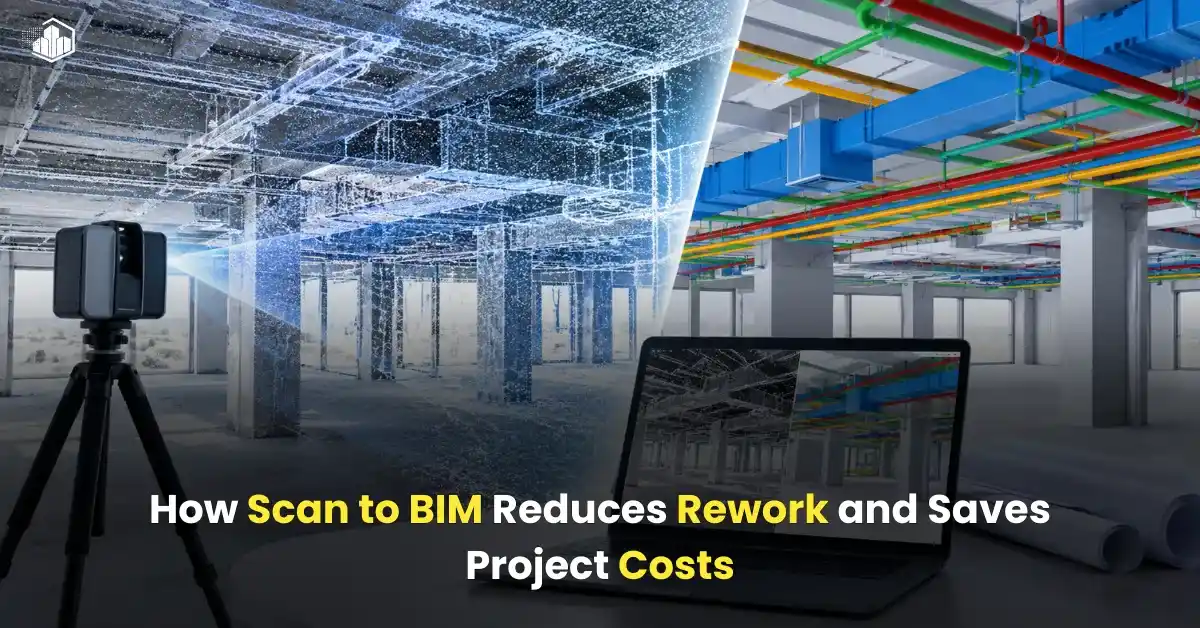
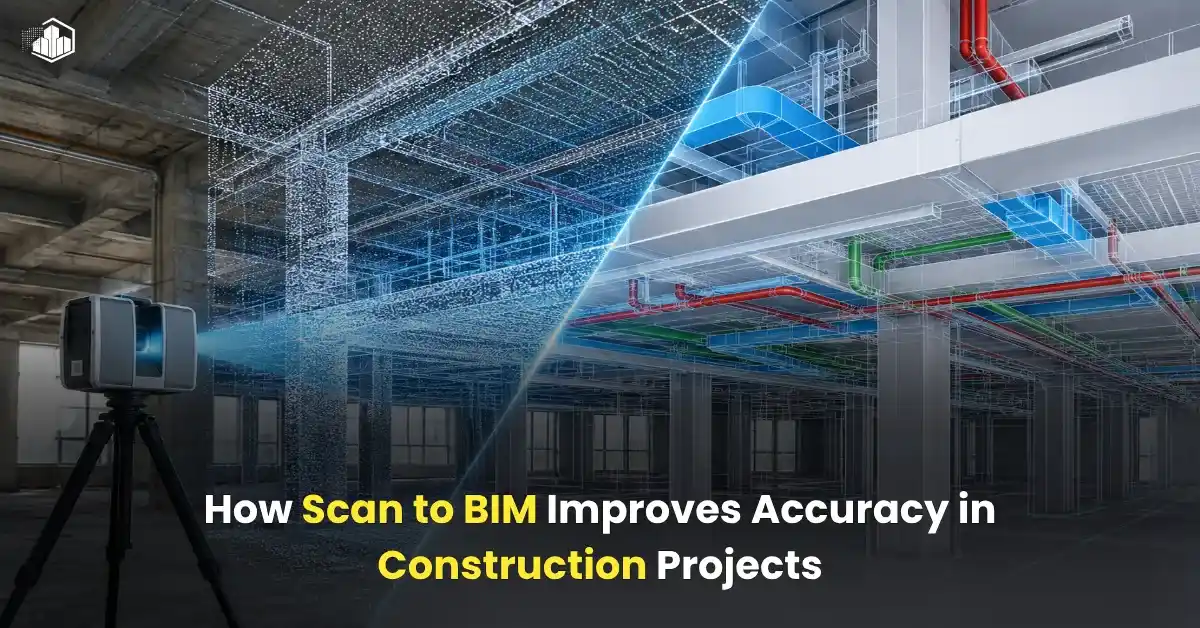
Scan to BIM is the process of using laser scanning or other reality-capture data to create a digital BIM model of an existing building or structure. The scan produces a point cloud containing millions of spatial points that represent walls, floors, ceilings, structural elements, MEP systems, doors, openings, and other physical features.
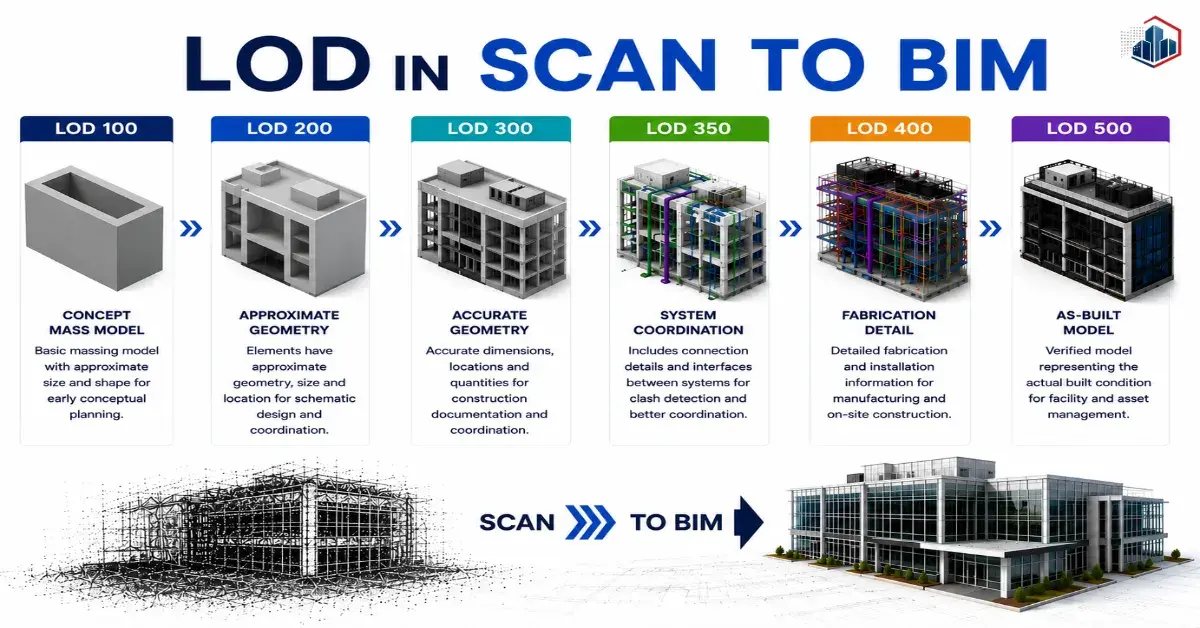
The point cloud is then processed and used as a reference for BIM modeling. Depending on the project requirements, the final model may be developed to a specific Level of Development (LOD), with defined accuracy, categories, families, and information requirements.
Autodesk describes Scan to BIM as a workflow that translates laser-scanned point-cloud data into BIM platforms for design, construction, and documentation.
This makes Scan to BIM particularly useful when existing drawings are outdated, incomplete, or unavailable.
In-House Scan to BIM: How Does It Work?
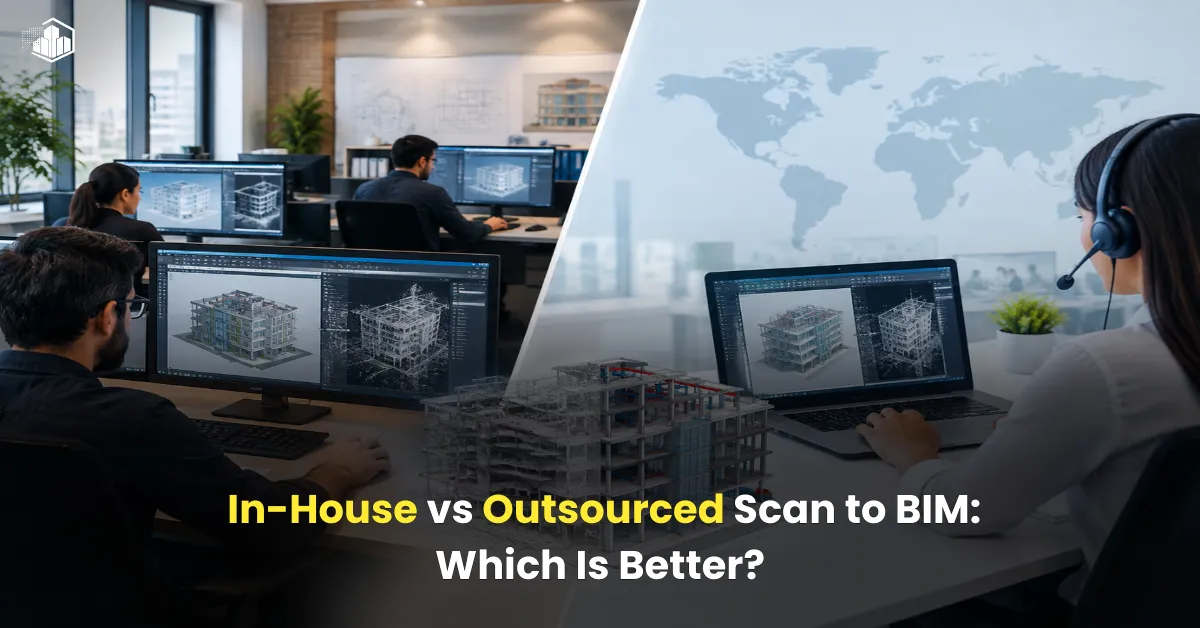
With an in-house approach, an AEC company manages the entire modeling process using its own employees, software, hardware, and quality-control procedures.
An internal team may handle:
- Point cloud processing and registration
- Revit model setup
- Architectural modeling
- Structural modeling
- MEP modeling
- LOD development
- Clash checking
- Quality control
- Revisions and coordination
The biggest advantage is direct control. Project managers can communicate with modelers immediately and keep the work within their existing project environment.
However, building an effective in-house team requires more than simply purchasing Revit or point-cloud software. Companies need trained modelers, BIM coordinators, suitable workstations, software licenses, quality-control procedures, and enough project volume to keep the team productive.
Autodesk notes that Scan to BIM quality can depend on factors such as the surveyor, equipment, field conditions, project requirements, accuracy requirements, and LOD expectations.
Outsourced Scan to BIM: How Does It Work?
With outsourcing, the AEC company provides the required scan data, project standards, scope, LOD, modeling requirements, and deliverable expectations to an external BIM service provider.
The outsourced team then handles the modeling workflow and submits the model for review.
A typical workflow includes:
Point Cloud Review → Project Setup → Architectural/Structural/MEP Modeling → Coordination → QA/QC → Client Review → Revisions → Final Delivery
This approach allows companies to add modeling capacity without permanently expanding their internal team.
For firms that receive Scan to BIM projects only occasionally, outsourcing can be particularly practical because they can access experienced resources when needed instead of maintaining a full-time specialist team throughout the year.
In-House vs Outsourced Scan to BIM
| Factor | In-House | Outsourced |
| Initial investment | Higher | Usually lower |
| Team control | Direct | Managed through coordination |
| Scalability | Requires hiring | Easier to scale |
| Specialist expertise | Depends on internal team | Access to specialist resources |
| Software cost | Company-managed | Usually handled by provider |
| Large project capacity | May require additional hiring | Can be expanded based on scope |
| Project communication | Direct internal communication | Dedicated coordination process |
| Long-term internal capability | Strong | Depends on outsourcing relationship |
| Suitable for | Frequent, predictable workload | Variable or high-volume workload |
The comparison shows why the decision should be based on business requirements rather than simply choosing the lowest modeling cost.
When Does In-House Make More Sense?
An in-house team can be suitable when Scan to BIM is a regular part of your company’s workflow.
For example, an architecture or engineering company working continuously on existing-building projects may benefit from developing permanent internal expertise. The team becomes familiar with company standards, templates, naming conventions, and preferred modeling methods.
In-house resources can also be useful when projects involve highly sensitive information or require constant face-to-face coordination.
However, the company needs enough ongoing work to justify the cost of maintaining these resources.
When Is Outsourcing More Practical?
Outsourcing can make sense when project demand changes from month to month or when a company receives a large project that exceeds its existing BIM capacity.
It can also help when a project requires specialist modeling skills that are not available internally.
For example, imagine an architectural firm receiving a large renovation project with extensive laser scan data. The firm’s internal team is already busy with current design projects, but the new project requires an as-built Revit model within a tight schedule.
Hiring several full-time modelers may take weeks or months and creates a long-term staffing commitment.
Instead, the firm can outsource the Scan to BIM workload to an experienced team, maintain project management and design control internally, and scale the external modeling resources according to project requirements.
A Practical Project Example
Consider a commercial building renovation where the client provides registered point cloud data and requests an as-built Revit model.
The project requires architectural elements, structural components, and selected MEP systems to be modeled at a defined LOD.
If handled completely in-house, the company must allocate modelers, coordinate point cloud processing, manage Revit production, perform quality checks, and accommodate revisions alongside its existing workload.
With an outsourced workflow, the internal project manager can provide the scope, LOD requirements, coordinate system, modeling standards, and point cloud data to a specialist team.
The external team develops the model, performs internal QA/QC, and returns it for review. The internal team can then focus more heavily on design decisions, coordination, and client communication.
The important point is that outsourcing does not remove the need for project management. Clear requirements and review procedures remain essential.
What Should You Check Before Outsourcing?
Before selecting a Scan to BIM provider, AEC firms should look beyond pricing.
Check whether the provider can demonstrate experience with:
- Point cloud processing
- Revit-based BIM modeling
- Architectural, structural, and MEP modeling
- Required LOD levels
- Model accuracy and tolerance requirements
- Clash detection and coordination
- QA/QC procedures
- Large point cloud datasets
- Project-specific BIM standards
- Revision management
The project scope should also clearly define the expected model content, exclusions, LOD, accuracy/tolerance, file formats, coordinate system, naming conventions, and delivery requirements.
Autodesk’s Scan to BIM guidance also highlights the importance of defining scope, LOD, accuracy, and quality-control procedures before modeling begins.
So, Which Approach Should You Choose?
The choice between in-house and outsourced Scan to BIM depends mainly on workload, internal capability, and project requirements.
In-house modeling provides direct control and can be valuable for companies with consistent Scan to BIM workloads and an established BIM team.
Outsourcing provides flexibility and access to additional modeling capacity without requiring a permanent increase in staff and infrastructure.
For many AEC companies, a hybrid approach can also work well. Core BIM coordination and project management can remain in-house, while production modeling is outsourced when workload increases.
The key is not simply deciding who creates the model. It is establishing a workflow that delivers accurate, coordinated, and usable BIM data within the required project schedule.
If your team needs additional modeling capacity for an existing-building or renovation project, we provide Scan to BIM services for converting point cloud and scan data into structured BIM models based on project requirements.
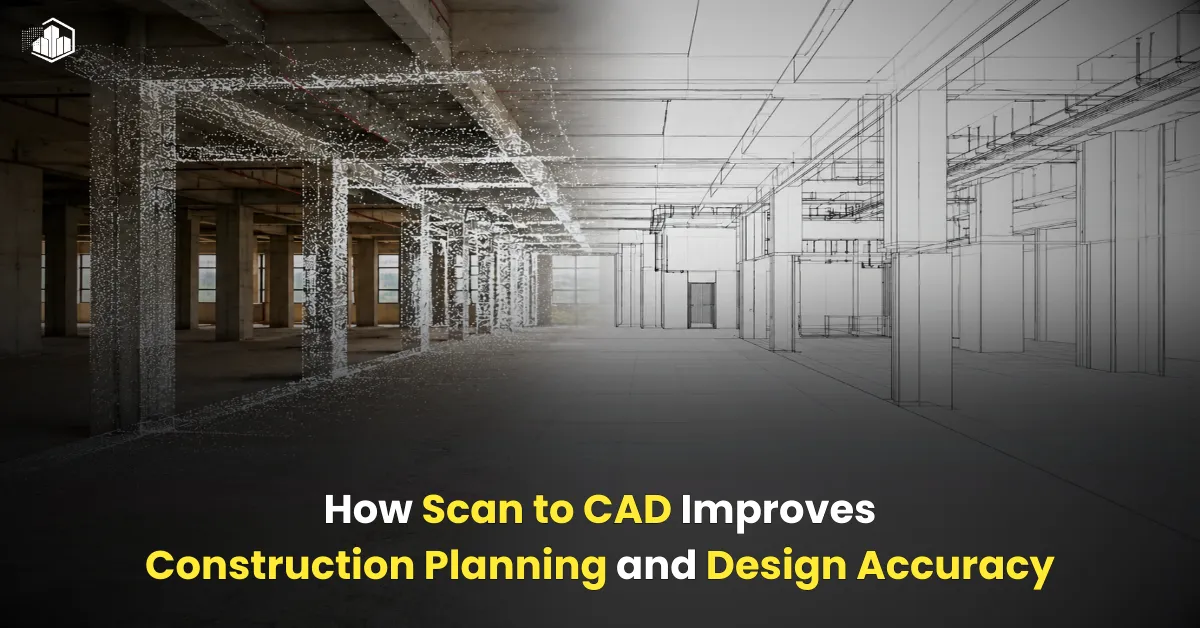
Also read: Scan to BIM vs Scan to CAD: What’s the Difference?